Perched 60 metres above the crashing waves of Cape Sounion, the Temple of Poseidon has watched over sailors and gods alike for nearly 2,500 years. Its marble columns, scarred by centuries of wind and myth, still command one of the most breathtaking panoramas in the entire Mediterranean world.
The sacred promontory of Cape Sounion, located approximately 70 kilometres south of Athens, has been a place of worship since at least the Archaic period of ancient Greece. Archaeological evidence reveals that a sanctuary dedicated to Poseidon, the god of the sea, earthquakes, and horses, was established on this dramatic headland as early as the 7th century BCE. Ancient Greeks considered the site a liminal threshold between the known world and the vast, unpredictable ocean, making it a spiritually charged location perfectly suited to honouring their most powerful marine deity. Votive offerings recovered by excavators confirm sustained religious activity at Sounion centuries before any monumental temple was constructed.
An earlier temple dedicated to Poseidon stood at Sounion before the structure visitors admire today. This older edifice, built around 490 BCE, was demolished by invading Persian forces during their destructive march through Attica in 480 BCE — the same campaign that razed the Acropolis in Athens. The Persians systematically destroyed Greek sanctuaries as acts of symbolic conquest, yet the ruins were deliberately left uncleared by the Athenians as a poignant memorial to the devastation. Fragments of this earlier temple, including sections of its sculptural frieze depicting Theseus and scenes from the Gigantomachy, were buried beneath the later structure and have since been recovered by modern archaeologists.
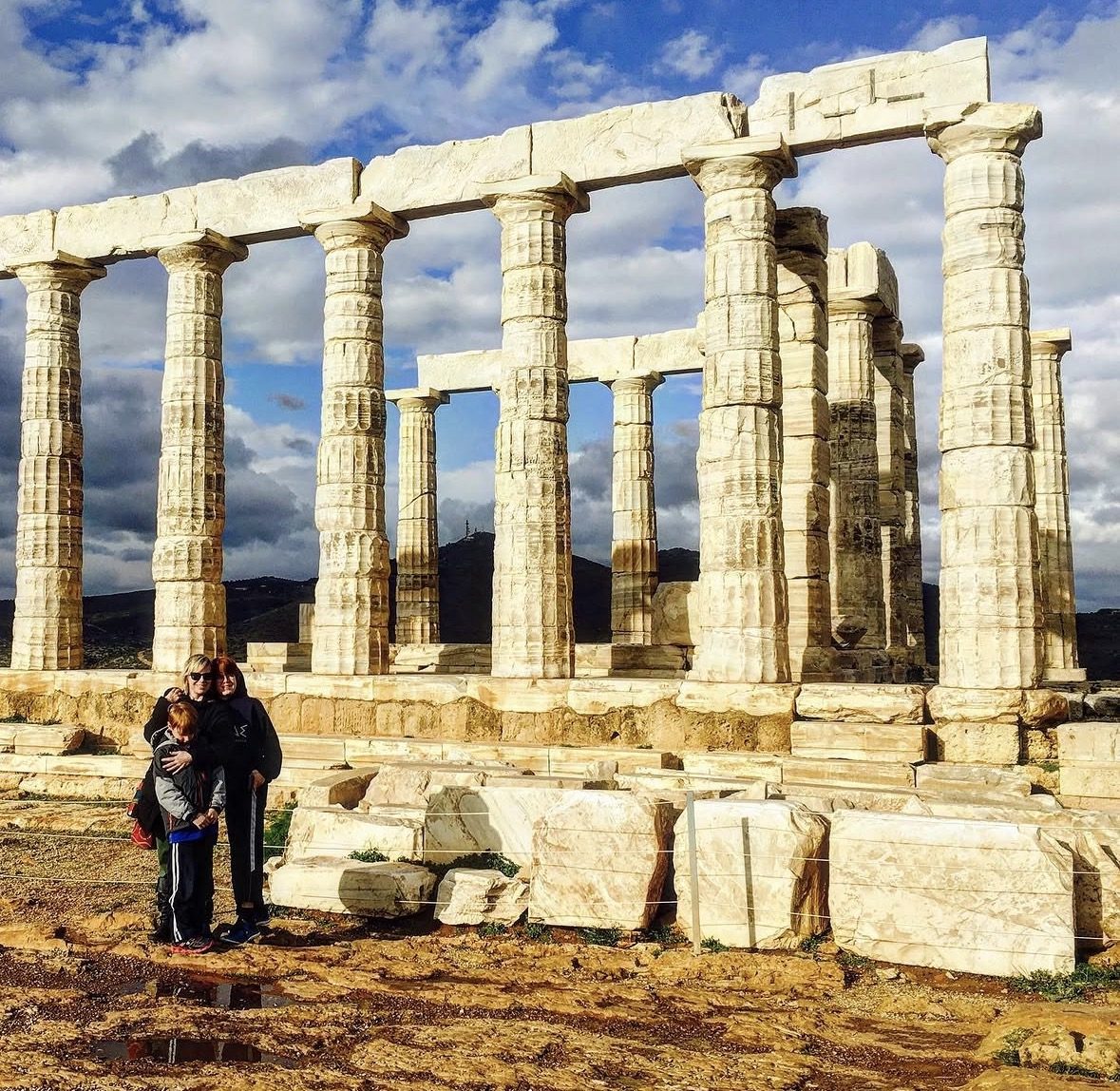
The temple that stands today was constructed between 444 and 440 BCE, during the golden age of Athenian democracy under Pericles — the same remarkable era that produced the Parthenon. Designed in the Doric order and built primarily from locally quarried marble sourced from the nearby Agrileza quarries, the temple originally featured 34 columns arranged in a peristyle formation. Measuring approximately 31.1 metres in length and 13.5 metres in width, it was a modestly scaled yet architecturally refined structure. To resist the relentless coastal salt winds, the columns were given unusually slender proportions and fewer flutes — just 16 rather than the standard 20 — a thoughtful engineering adaptation unique to Sounion.
Poseidon occupied a central position in the Athenian mythological imagination, particularly given Athens's identity as a maritime empire during the 5th century BCE. According to myth, Poseidon and Athena competed for patronage of the city: Poseidon struck the Acropolis rock with his trident, producing a saltwater spring, while Athena offered an olive tree. The citizens chose Athena, but Poseidon remained deeply venerated, especially by sailors who prayed at Sounion before embarking on voyages across the Aegean. The temple also featured a celebrated chryselephantine or bronze cult statue of Poseidon, now lost, which stood within the inner sanctuary and received offerings from grateful seafarers returning safely to port.
The sanctuary complex at Sounion extended well beyond the temple itself, encompassing a temenos — a sacred precinct — enclosed by a massive retaining wall, propylaia gateways, stoas for pilgrims, and a second, smaller temple dedicated to Athena located slightly to the northeast. Festivals honouring Poseidon were held periodically, drawing participants from across Attica who would travel the Sacred Road from Athens to the cape. The Isthmian Games at Corinth, one of the four great Panhellenic festivals, were also dedicated to Poseidon, reinforcing his pan-Greek cultural significance. Sounion thus functioned as far more than a local shrine; it was a powerful statement of Athenian naval ambition and religious piety.
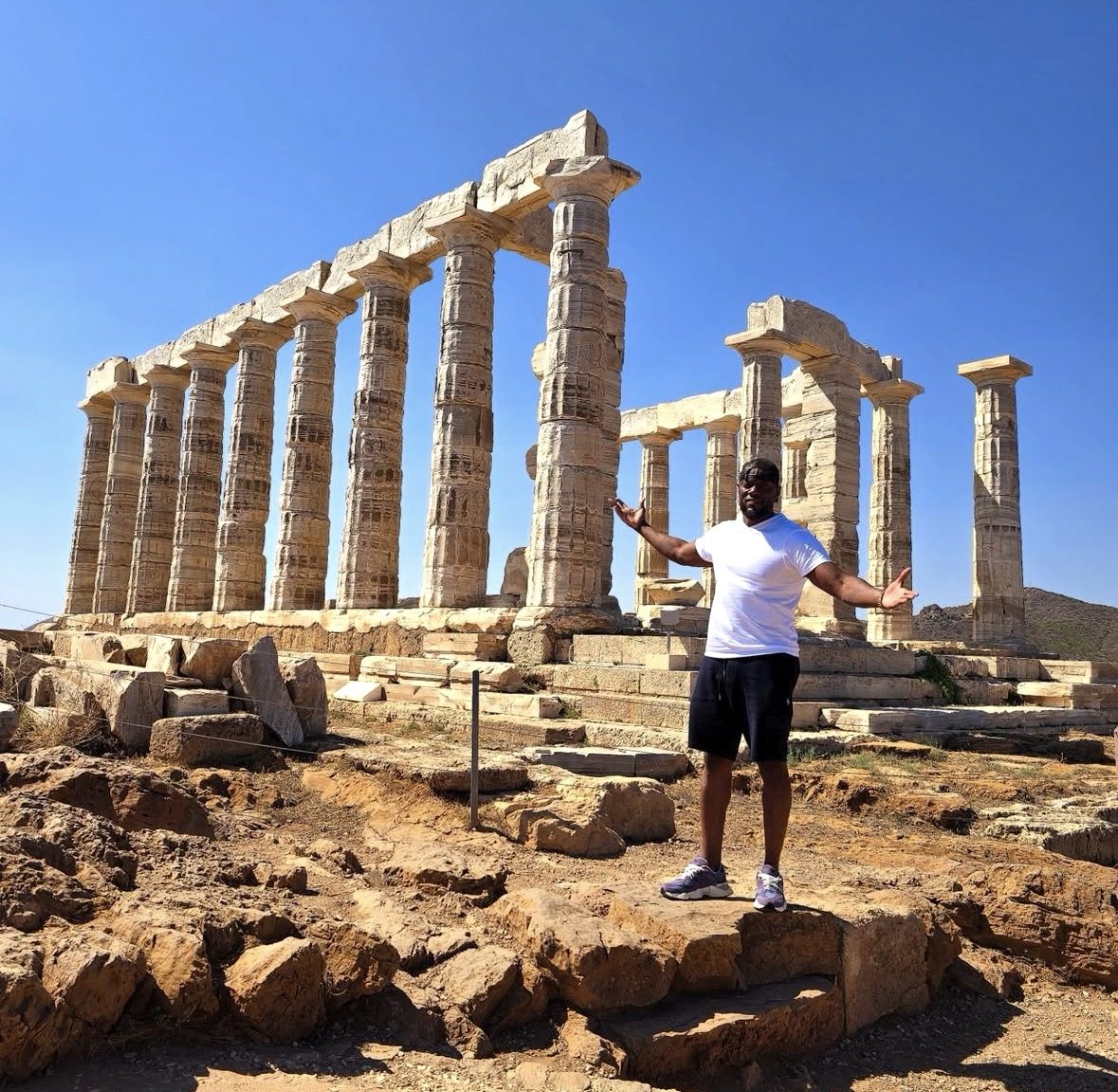
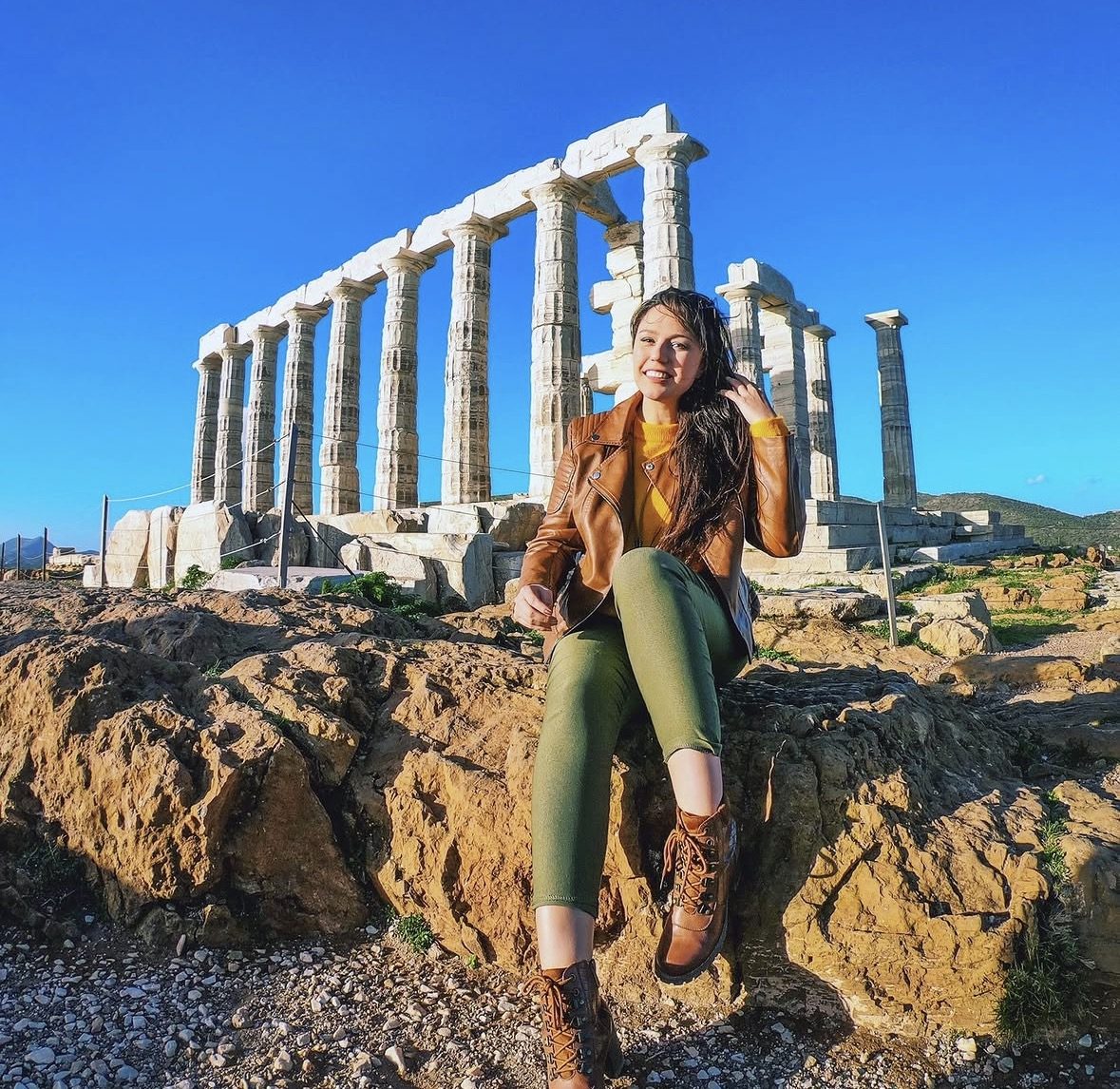
Following the decline of the Roman Empire and the Christianisation of Greece, the Temple of Poseidon fell into disuse and gradual ruin. During the Byzantine and Ottoman periods, Sounion remained largely isolated, its remote location protecting it from wholesale demolition while also allowing centuries of weathering, looting of marble for lime, and structural collapse. By the 18th century, European Grand Tour travellers began venturing to the cape, captivated by its spectacular setting and romantic decay. The British antiquarians James Stuart and Nicholas Revett published measured drawings of Sounion in their landmark work Antiquities of Athens in 1762, introducing the temple to a wider scholarly and artistic European audience.
The most famous visitor in the temple's post-classical history arrived in 1810: the English Romantic poet Lord Byron, who was so moved by the site that he carved his name into the base of one of the surviving columns — an act of Romantic hubris that modern conservationists understandably deplore but that visitors still seek out today. Byron immortalised the headland in his 1810 poem Don Juan with the celebrated opening lines referencing the marble steep where nothing save the waves and I may hear our mutual murmurs sweep. His visit cemented Sounion's reputation as a place of sublime beauty and melancholy grandeur, drawing generations of literary pilgrims.
Systematic archaeological excavations at Sounion were undertaken primarily by the Greek Archaeological Society, with significant campaigns conducted in the late 19th and early 20th centuries. Scholars recovered sculptural fragments, pottery, bronze votives, and architectural elements that helped reconstruct the site's long history of use. The Greek government designated Cape Sounion as a protected archaeological site, and conservation and anastylosis projects have continued into the 21st century to stabilise the remaining columns and preserve the marble fabric of the structure. Today, the site is managed by the Greek Ministry of Culture, and ongoing research continues to yield new insights into ancient religious and maritime life at this extraordinary headland.
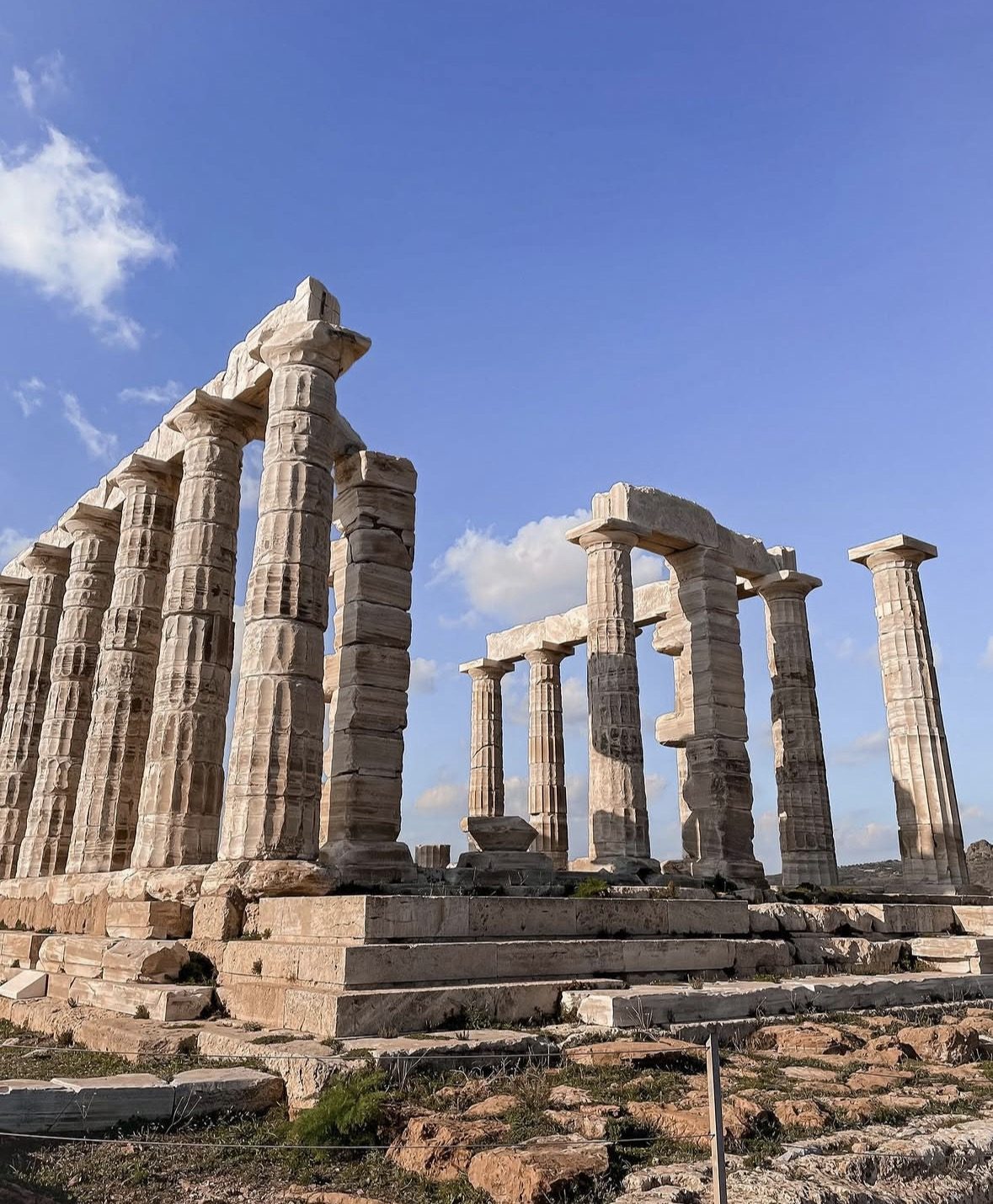
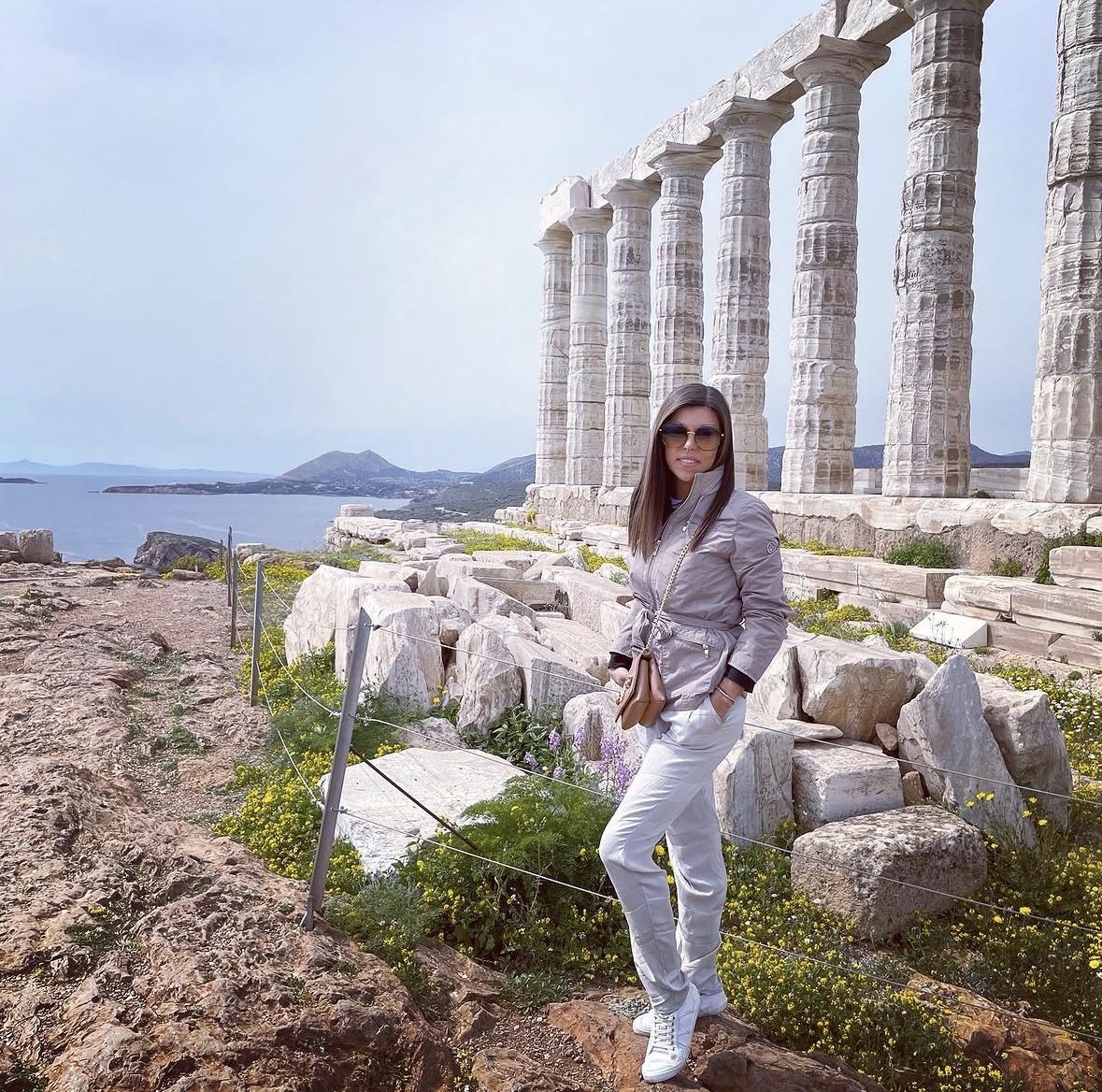
Each year, hundreds of thousands of visitors make the journey from Athens to stand among the luminous marble columns of the Temple of Poseidon and gaze out across the shimmering blue expanse of the Aegean and Saronic Gulfs. The site is open daily, and the experience shifts dramatically depending on the hour — arriving at sunset, when the columns glow amber and rose against a darkening sky, is considered one of the most transcendent travel experiences in all of Greece. A small but informative on-site museum displays recovered artefacts, and guided tours provide essential historical context that deepens appreciation for the ancient civilisation that raised this monument beside the sea.
The Temple of Poseidon at Cape Sounion is not merely a ruin to be photographed; it is an invitation to stand at the very edge of the ancient world and feel the unbroken thread connecting you to the mariners, philosophers, and poets who once stood in the same wind-swept spot. Whether you approach the site independently by car or join one of the many guided day tours departing daily from Athens, this is a journey that rewards every traveller with beauty, history, and a profound sense of human ambition written in marble. Come for the mythology, stay for the sunset, and leave carrying a piece of antiquity within you.
Ready to Experience It Yourself?
Guided day tours to the Temple of Poseidon depart daily from Athens, combining expert historical commentary with the unparalleled spectacle of a Aegean sunset from the cliffs. Booking a curated tour ensures you discover the full depth of this UNESCO-recognised archaeological landscape without missing a single detail. Secure your place today and let one of Greece's most legendary monuments rewrite how you see the ancient world.
Book Your Tour Now